

Organic Wine
The laws to certify a wine as ‘organic’ are different from country to country, so a wine that is organic in one country may not be in another. An organic wine is made with grapes grown without the use of industrially produced fertilizers, pesticides, fungicides, and herbicides. During the wine making process, there is little or no manipulation with such technologies as reverse osmosis, excessive filtration, and flavour additives. Usually fermentation takes place with the use of wild yeasts instead of the cultured varieties.
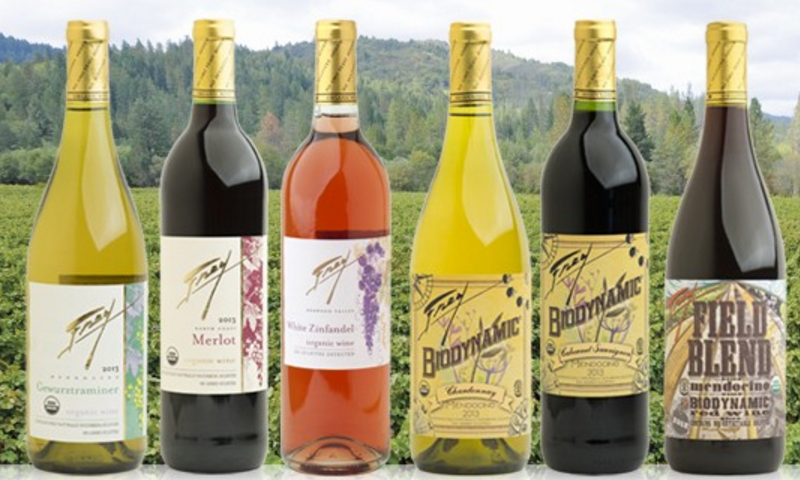
The use of sulphites is very hotly debated. Many wine makers claim the addition of sulphites is necessary to produce a stable wine, while others insist their use is not required. (It is important to note that sulphites occur naturally in wine as a by-product of fermentation, so no wine is completely sulphite free.) For a wine to be labelled ‘Organic’ and bear the USDA label in the United States, the wine must not contain any added sulphites. In Canada, wines labelled as ‘100% Organic’ also do not have any added sulphites; however, wines labelled simply as ‘Organic’ may have added sulphites, but in much smaller amounts than in a conventional wine.
In the European Union, there is no legal definition of ‘organic wine’ and the term is not allowed on labels. Legally in the EU, organic wine does not exist, but wine may be made using organically grown grapes. This does not mean that no chemicals were added during the winemaking process. The grapes may have been organic but the winemaking methods were not. The term ‘Natural Wine’ has been adopted for wines that have been made in the EU with no manipulation or additives, including added sugars or yeasts. The sulphite content of the wine must not contain more than 10 mg/l for a red wine and no more than 25 mg/l for a white.
Biodynamic Wine

Biodynamics is a more holistic and spiritual version of organic grape growing and farming. It sees the entire farm and vineyard as a living entity that does not require any external sources to function and remain healthy. Everything in the environment, from the vines themselves, to the soil, the insects, the other larger animals, even the sun, moon, and the stars have an impact on the health of the vineyard.
Bill Redelmeier, owner of Southbrook Vineyards, Canada’s first and only DEMETER certified biodynamic winery, states that organic vineyards use organic chemicals to combat problems, but that biodynamic vineyards are so healthy to begin with, that there are no problems. For more information on Southbrook Vineyards and biodynamic viticulture read “The Emergence of Biodynamic Wine in Canada.”
But, do biodynamically grown grapes make better wine? Many very famous French wines are made using biodynamically grown grapes. Anne-Claude Leflaive of Domaine Leflaive in Burgundy, France, is a firm believer in biodynamics. She first began experimenting with biodynamics in 1990. She and her crew tasted the wines blind for 7 years and she claims that “most of the time the biodynamic wines showed more complexity and purity.” Domaine Leflaive white Burgundy is one of the most sought after wines in the world.
Leflaive is not the only famous winery to adopt biodynamics. Domaine de la Romanée-Conti, also in Burgundy, switched over to biodynamics years ago. Chapoutier, in the Rhône; Coulée de Serrant, in the Loire; and Chateau La Tour Figeac and Pontet Canet, in Bordeaux, are just a few among many well-known French wine estates to use biodynamically grown grapes. There are also many biodynamic grape growers and wine producers in Italy, Germany, and Austria, as well as the USA, Australia, Chile, and New Zealand.

- How to support your child’s mental health: A parent’s guide - February 1, 2025
- Can data centers stay green? Balancing digital growth with clean energy - January 26, 2025
- Why Blockchain could be end of high fees, delays in global payments - January 17, 2025
- Abridge AI: Silent scribe transforming healthcare interactions - January 5, 2025
- What makes quantum AI a game-changer for technology - December 25, 2024
- How businesses must adapt to evolving cyber threats in 2025 - December 4, 2024
- How vaping stiffens blood vessels and strains lungs: Study - November 26, 2024
- OpenAI Codex or Google Codey? Finding the perfect AI for your code - November 18, 2024
- What Google’s Project Jarvis means for future of digital interaction - October 28, 2024
- 11 tips for creating engaging ad content - July 8, 2024